

Offline
Log expenses and take photos with no signal: they are queued on your phone and upload when you reopen Monuvia with a connection.
See it in the manual →A budget you actually understand, that fills itself in and fits in your pocket. Every feature links to its manual article, with real steps and screenshots.
Monuvia sets aside your bills and your savings goal, then spreads what's left across the weeks. Each week's budget is fixed and only drops with what you spend.
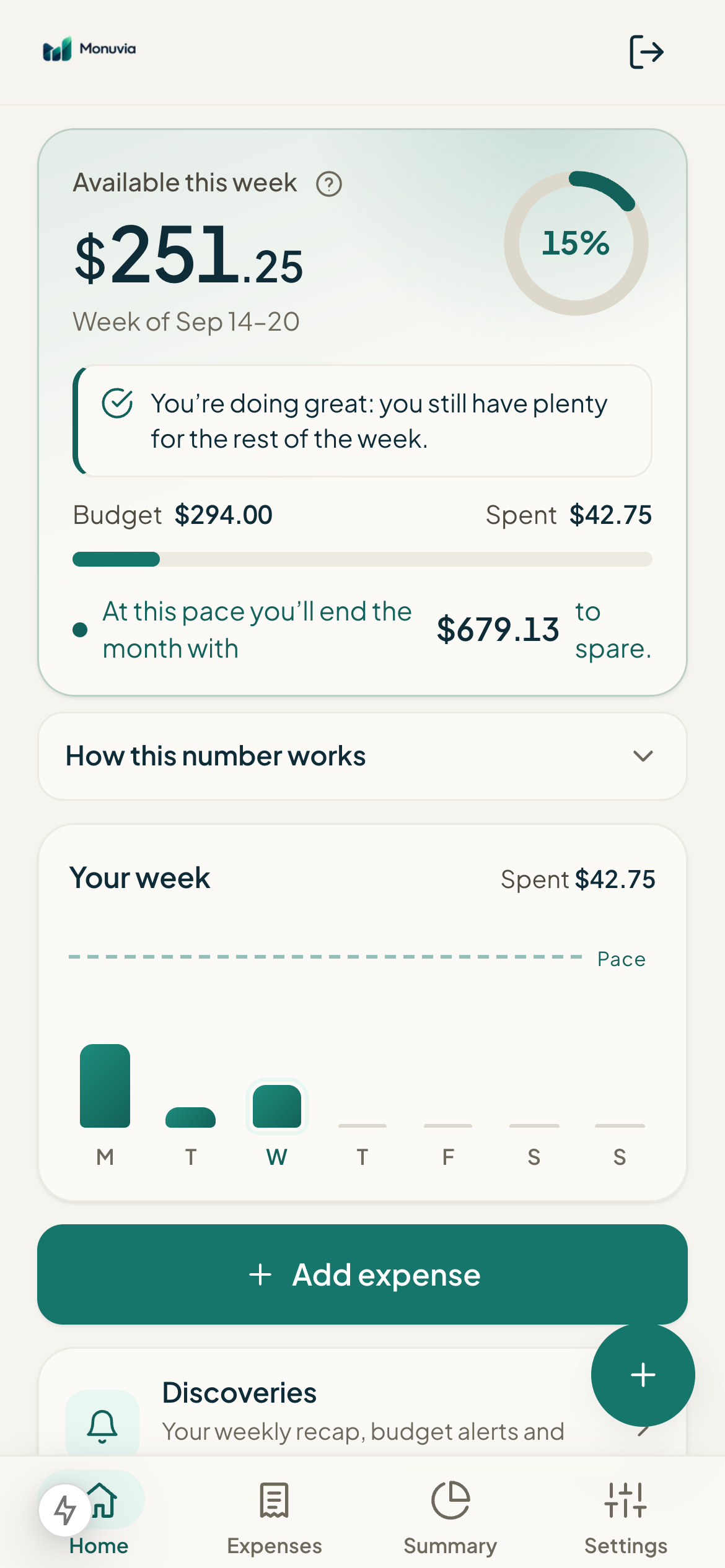
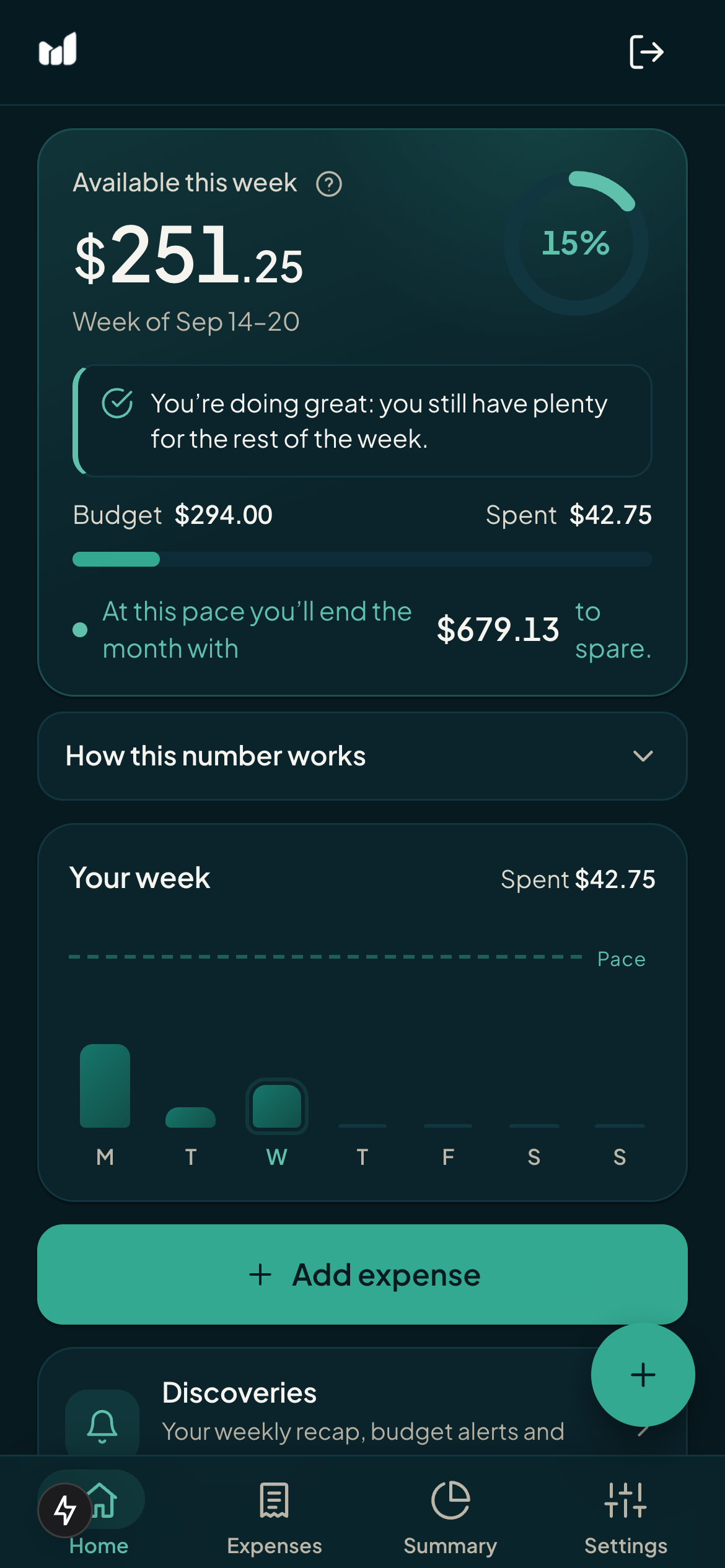
Log it in seconds or photograph a receipt: the total is recognized right on your phone. After that, everything under control by week or by month.
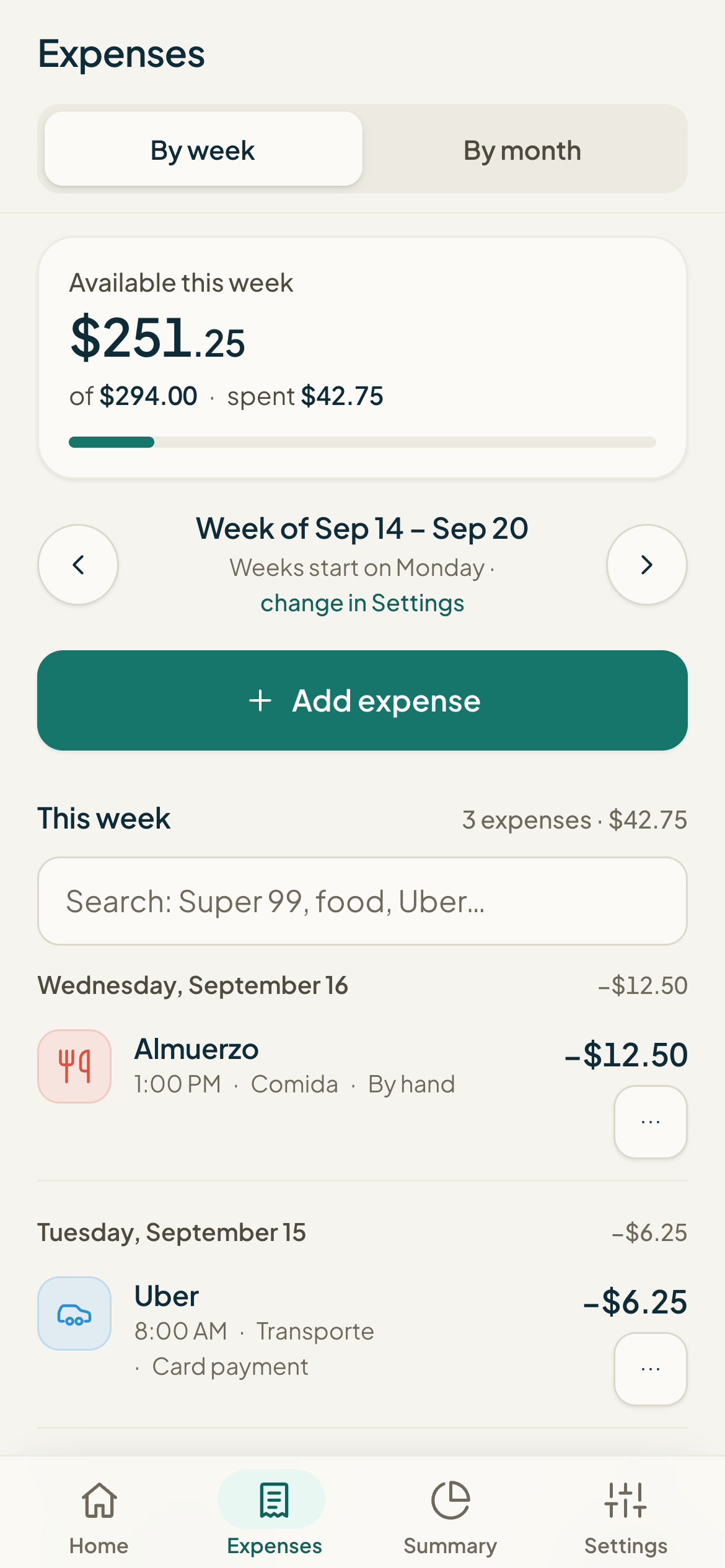
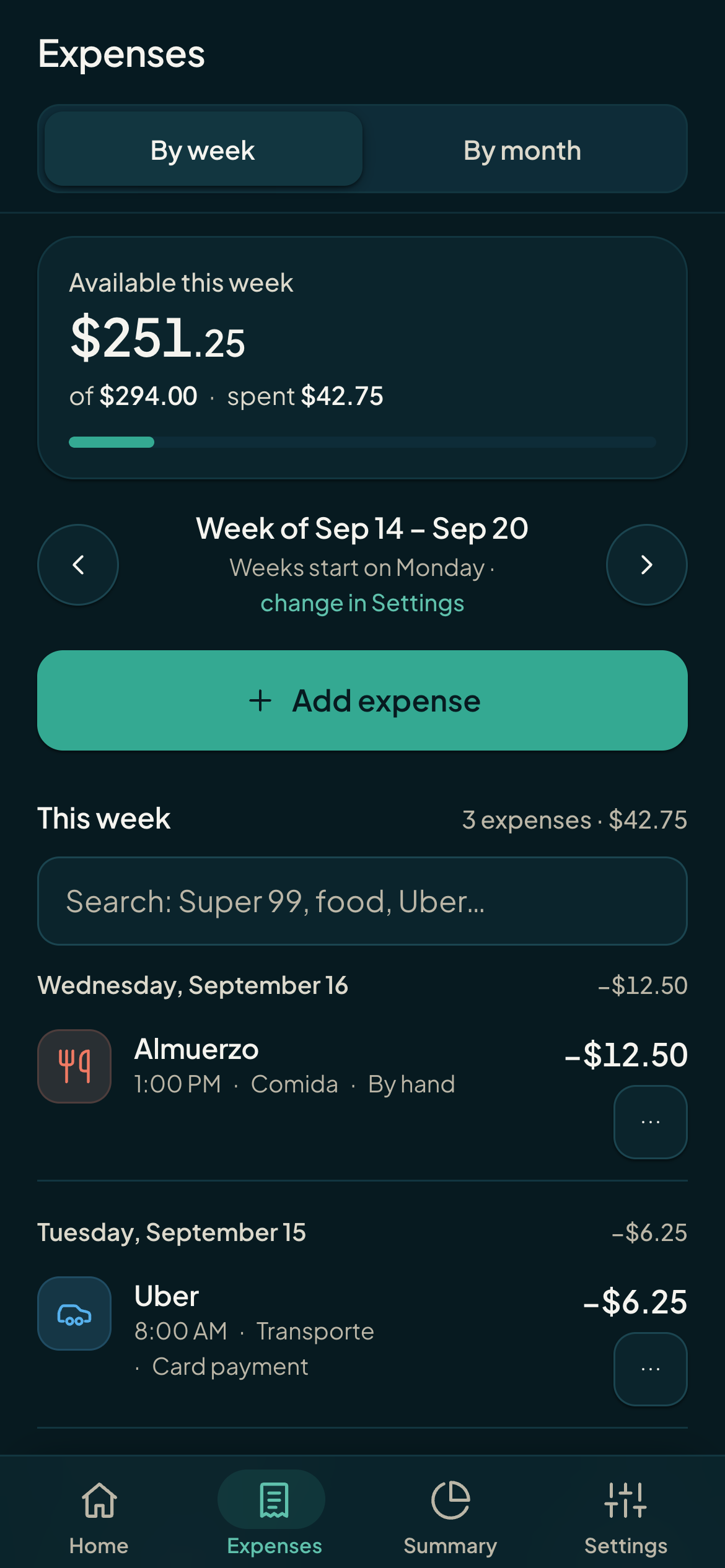
See where your money goes at a glance, and take the document with you when you need it.
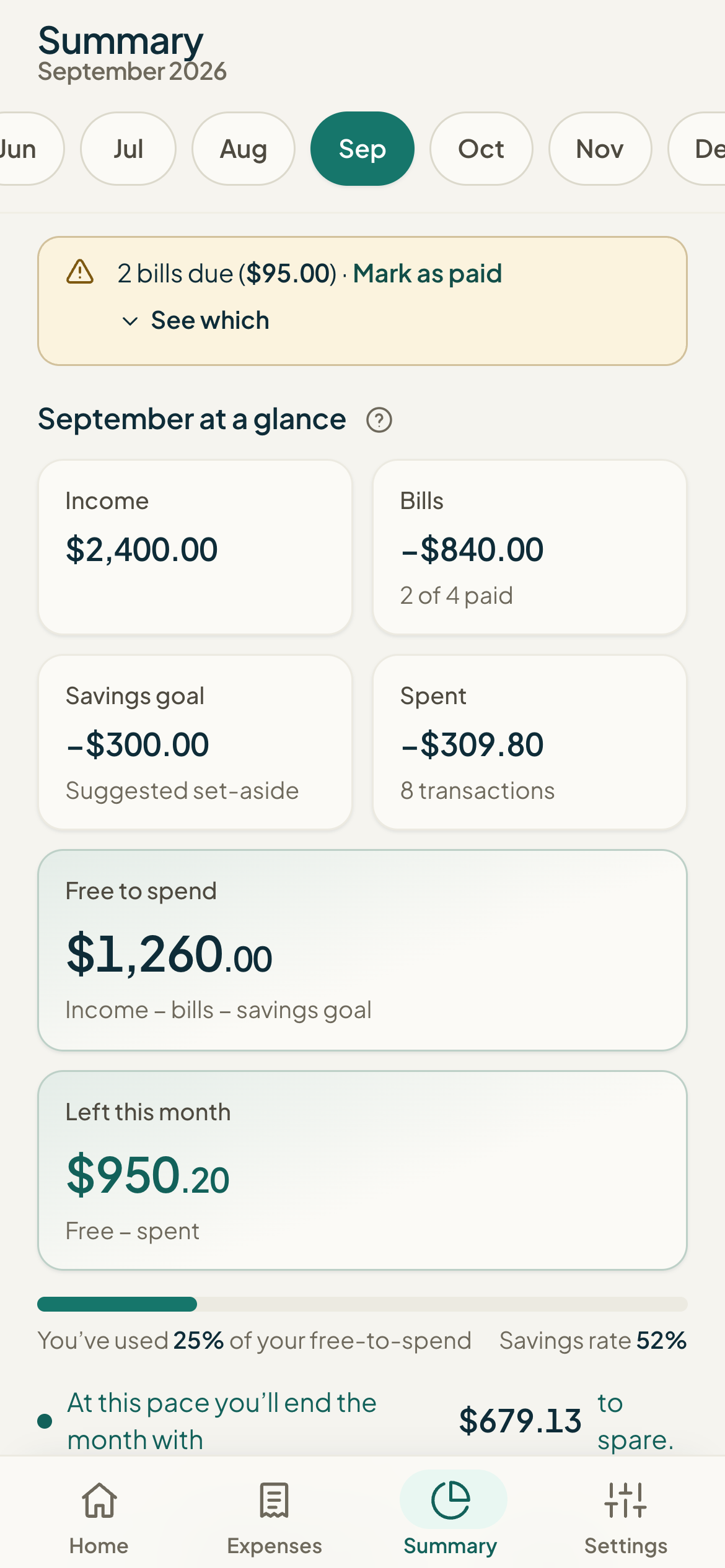
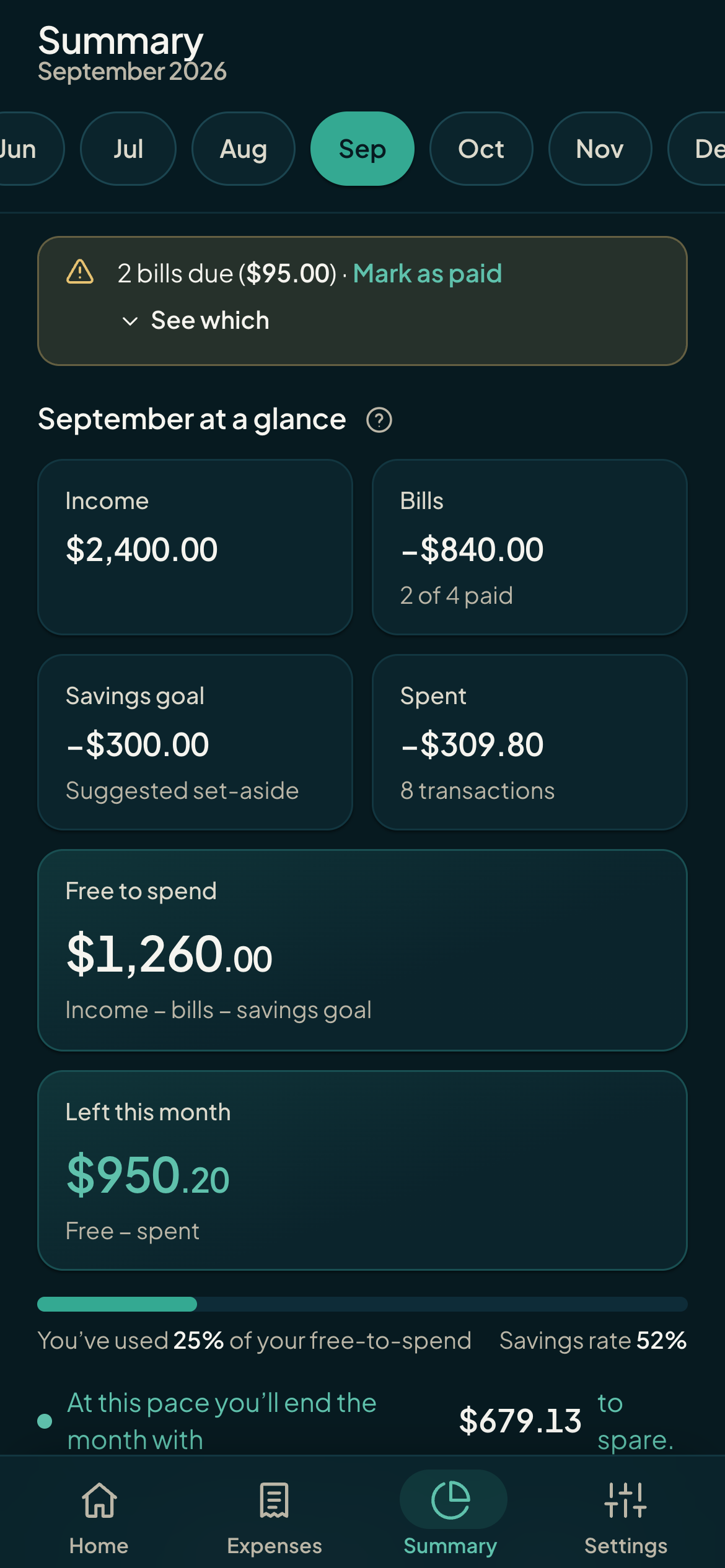
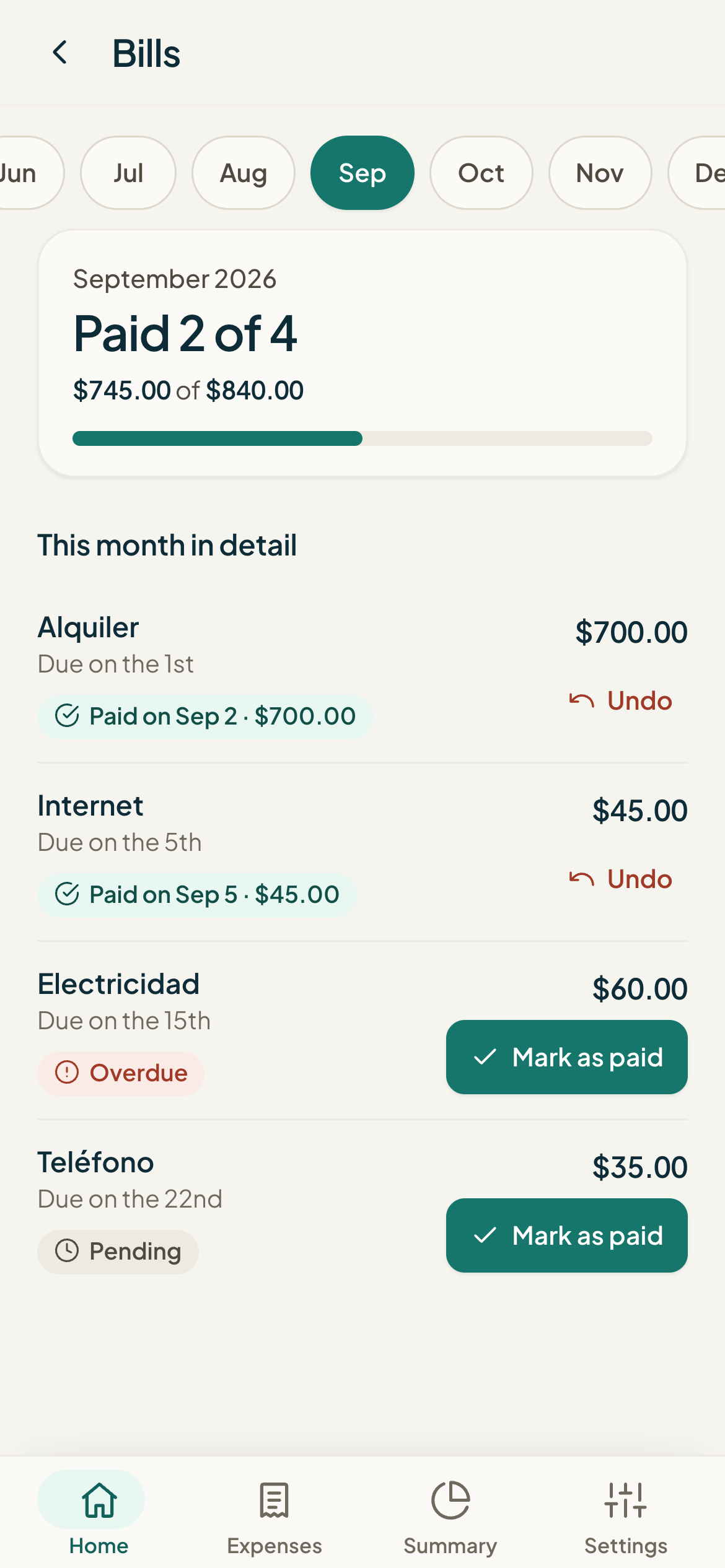
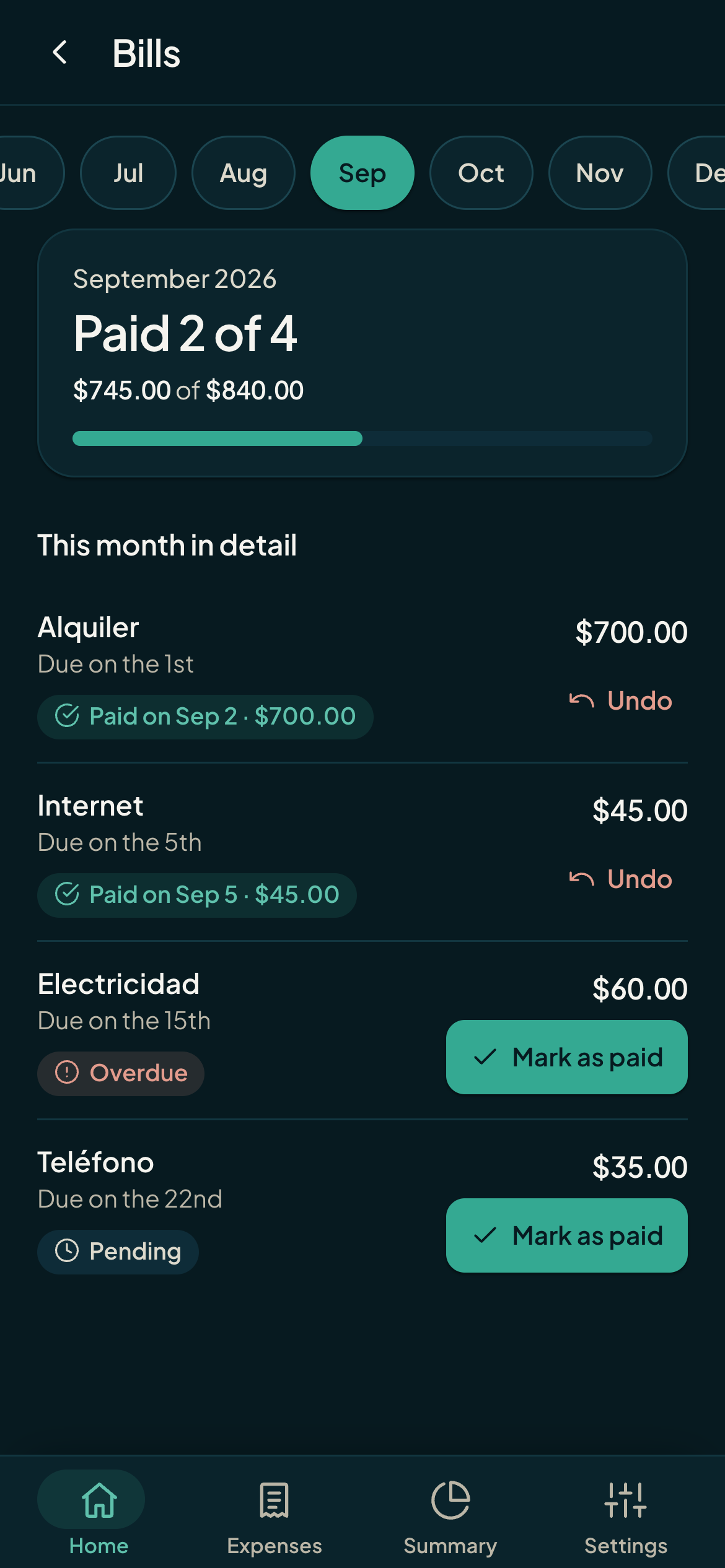
Your fixed payments, always up to date. Mark what you paid with its real amount and date.
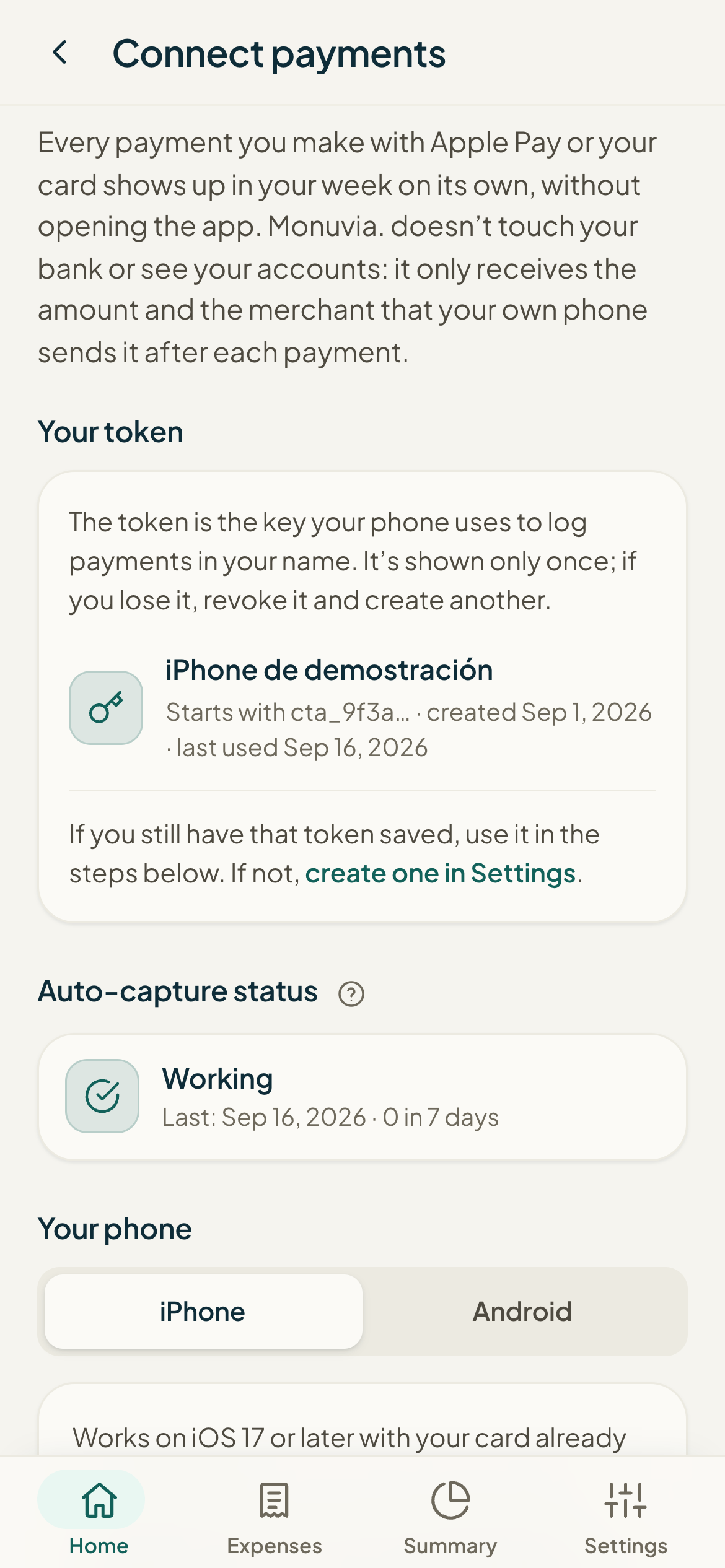
Connect your phone once and your contactless payments come in on their own, with available this week kept up to date.
Log expenses and take photos with no signal: they are queued on your phone and upload when you reopen Monuvia with a connection.
See it in the manual →Invite by code: everyone signs in with their own account and works on the same budget. It also works perfectly on your own.
See it in the manual →Alerts for bills and income, plus a biometric lock with Face ID or your fingerprint on this device. Everyone sees only their own data.
See it in the manual →Monuvia doesn't use a chatbot or send your finances to an external artificial-intelligence service. Here's exactly what technology is involved and where it runs.
When you photograph a receipt, an optical character recognition model (Tesseract.js) runs inside your browser. The image never leaves your phone; only the text is used. It's the only machine-learning component in Monuvia, and it only transcribes image to text: it doesn't interpret or decide for you.
From the recognized text, Monuvia takes the total (prioritizing the "TOTAL" line, discarding subtotals, sales tax, or reward points) and the merchant using clear rules. These are deterministic rules you can predict, not an "intelligent" interpretation.
As you type the merchant, Monuvia suggests a category based on your rules and how you classified things before. The calculation happens in your own database; there's no trained model or external service. You always decide.
On iPhone, an Apple Shortcut logs your Apple Pay payments; on Android, an automation app forwards the notification text. It's your phone that sends the data: Monuvia never connects to your bank.
Available this week is calculated with a clear formula in your database (income − bills − savings, spread across days). It's deterministic, not a prediction.
Each account only sees and changes its own data (or that of the household it has joined), thanks to per-user access rules in the database.
The capture is done by your phone, not by Monuvia. That's why it depends on your device and a one-time setup.
A signed Apple Shortcut sends every Apple Pay payment to Monuvia, hooked to a Shortcuts automation with the "Transaction" trigger. It requires a card in Wallet and creating the automation.
An automation app (MacroDroid or Tasker) forwards the text of your bank or Google Wallet notification to Monuvia, which extracts the amount and the merchant. It requires installing the app and giving it access to notifications.
Create your account and find out, this very week, how much you can spend with peace of mind.